“For me, wearing an orange shirt is a symbol of recognizing Phyllis Webstad’s right to have worn her new orange shirt on her first day of school and not have faced forced assimilation in a land her people had lived on from time immemorial”, writes Kristy McLeod in Decolonization and Me–Conversations about Healing a Nation and Ourselves.
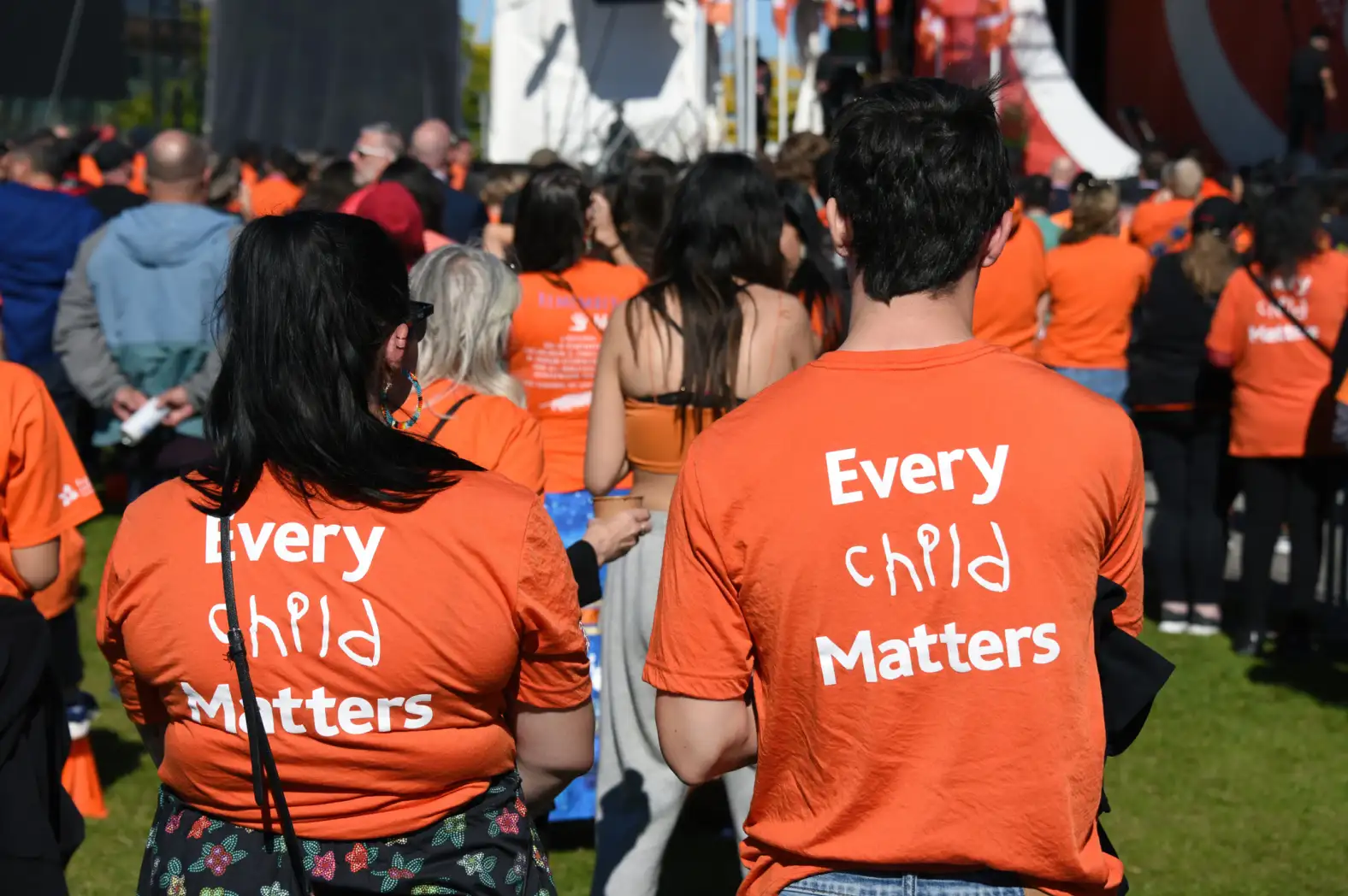
When Phyllis, a Northern Secwépemc, was just six-years-old, she was forced to attend residential school. Upon arrival, her brand new orange shirt, a gift from her grandmother, was confiscated and never returned. Phyllis has described how this dispossession made her feel like she did not matter. “Every Child Matters” subsequently became the slogan of the Orange Shirt Day movement.
So what does it mean to wear orange on September 30?
It is a way of honouring residential school survivors. It is also a cloak of mourning for the children who never came home. It can also be a gesture of protest against the colonial system that erected the residential schools. It can even be a way to start conversations and raise awareness in your community.
Even if the last standing residential school closed in 1996, the wounds the system inflicted are still felt across Indigenous communities today.
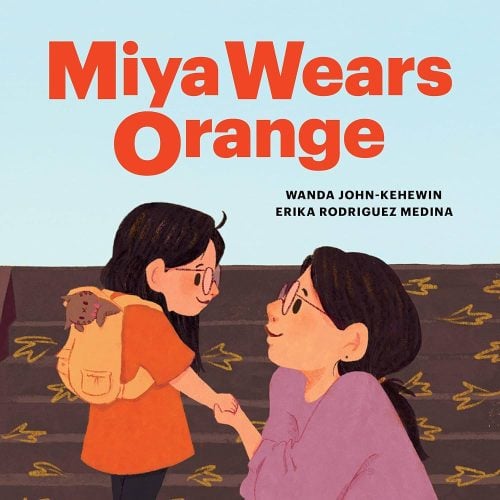
In her picture book Miya Wears Orange, Cree writer Wanda John-Kehewin explores the reaction of a young Indigenous girl when she first hears about residential schools from her teacher at storytime. Miya, the only Indigenous kid in her class, worries that she too will be taken far from her home. The story subtly hints at the ongoing emotional impact of Canada’s colonial system.
This legacy still shapes children’s fears and families today as Joleen Bateman reminds us. Joleen is the head of Alberta Aboriginal Head Start Association which provides early childhood education to Indigenous children. Head Start doesn’t have a blanket approach to Truth & Reconciliation Day because “we have to be sensitive to the community and families that every program works with. It’s going to look and feel very different from a small Métis settlement to a large city like Edmonton.” The families who come to their programs have been through the residential school system. Joleen underlines that Head Start educators understand and show “respect to the generations behind the children.”
There is something important in Joleen’s insistence on context. There is no single way to mark September 30, just as there is no single Indigenous experience.
There is no one way to wear orange.
How we talk to children about residential schools needs to be grounded in the communities, families and children we serve.